OCC Urges U.S. Community Banks to Enter the Stablecoin Market
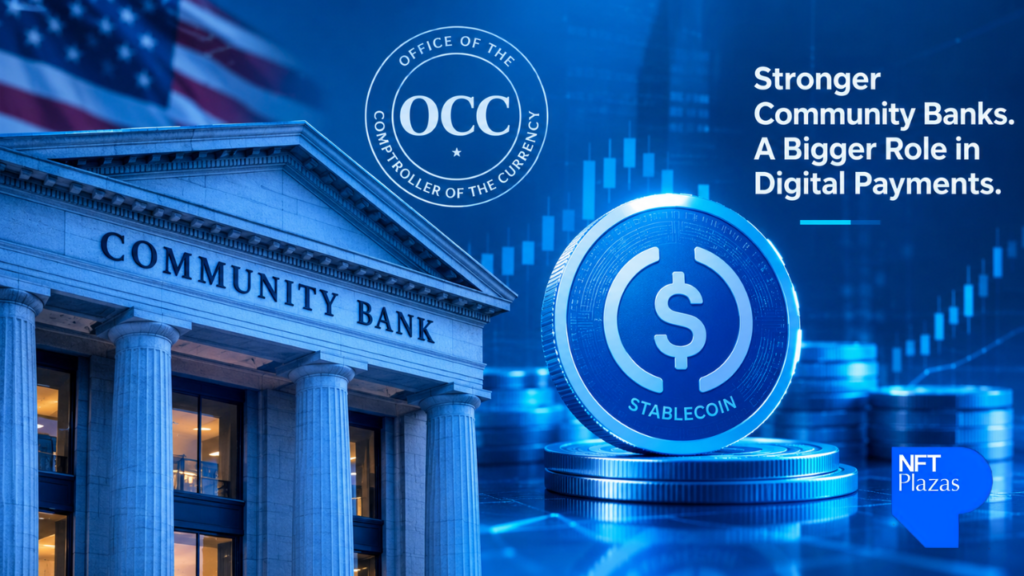
The U.S. Office of the Comptroller of the Currency (OCC) is encouraging community banks to enter the stablecoin market, inviting smaller lenders to apply for permission to issue their own dollar-pegged tokens ahead of the implementation of new federal regulations in January 2027.
In a statement published Monday, October 26, the regulator urged community banks to apply directly or through subsidiaries to become authorized payment stablecoin issuers under the Guiding and Establishing National Innovation for U.S. Stablecoins (GENIUS) Act.
The OCC said the initiative would allow community banks to help shape the future of payments. It also aligns with its Community Bank Comeback initiatives, which aim to tailor regulation and supervision so smaller lenders can grow, compete and continue serving their communities.
The move comes as stablecoins gain traction in digital payments and traditional banks face growing competition from cryptocurrency companies.

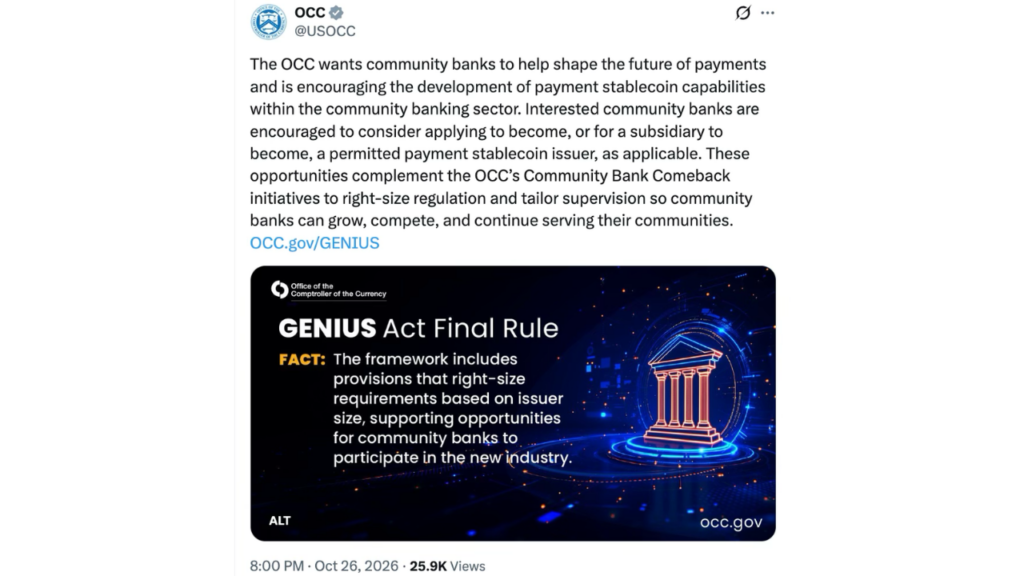
OCC Urges U.S. Community Banks to Enter the Stablecoin Market (Source: X)
GENIUS Act Sets Rules for Stablecoin Issuers
Signed into law by President Donald Trump on July 18, 2025, the GENIUS Act establishes a federal regulatory framework for payment stablecoins, including requirements for issuer authorization, reserve assets and regulatory oversight.
The OCC finalized its implementing regulations in October, with the rules scheduled to take effect on January 18, 2027.
Under the framework, issuers must demonstrate their ability to maintain adequate reserves, meet redemption obligations and manage financial and operational risks. Requirements also cover capital, liquidity, governance, auditing and regulatory reporting.
However, the OCC has not yet begun accepting applications. The process will open after the Office of Management and Budget approves the necessary federal paperwork.
Existing stablecoin issuers may qualify for transitional relief. Those submitting substantially complete applications by the January deadline can request temporary waivers allowing them to continue operating while regulators review their submissions. The OCC said it generally expects to grant such waivers when appropriate.
For community banks, the framework offers a potential route into a market increasingly associated with cryptocurrency companies and larger financial institutions. However, applicants must demonstrate that they have the systems, financial resources and risk controls needed to operate as authorized issuers.
Banks Fear Stablecoins Could Drain Deposits
The OCC’s invitation comes amid a dispute between traditional banks and the cryptocurrency industry over stablecoin rewards.
Banking groups have urged lawmakers to restrict stablecoin yields, warning that attractive rewards could encourage customers to move money from conventional bank accounts to cryptocurrency platforms. Such transfers could weaken banks’ deposit bases and reduce the funds available for lending.
The GENIUS Act prohibits payment stablecoin issuers from paying interest or yield solely for holding their tokens. However, it does not automatically prohibit every reward program offered by cryptocurrency exchanges or third parties.
This distinction has become a major point of contention. Banking groups argue that third-party incentives could still make stablecoins attractive alternatives to traditional savings products, even when issuers themselves do not pay interest.
The concern is particularly significant for community banks, which depend on deposits to finance loans to households and businesses. If customers increasingly hold stablecoins through cryptocurrency platforms, smaller lenders could face greater competition for funding.
Encouraging community banks to issue their own tokens could help them participate in digital payments rather than lose ground to crypto-focused businesses. However, entering the market will not necessarily protect their deposits or guarantee new revenue.
The OCC’s final rules also do not require stablecoin issuers to hold their reserves at community banks. Nor must community banks accept deposits from stablecoin issuers.
The regulator acknowledged that deposits backing stablecoins could be less stable than traditional deposits, particularly during the market’s early development. This uncertainty adds another consideration for lenders evaluating the potential benefits of issuing digital tokens.
OCC Faces Scrutiny Over Crypto Bank Charters
The initiative comes as the OCC faces legal and political scrutiny over its treatment of cryptocurrency companies.
On October 2, 2026, the Independent Community Bankers of America (ICBA) sued the OCC, accusing the regulator of exceeding its legal authority by granting national trust bank status to crypto-focused firms.
Traditional banking representatives argue that such approvals could allow cryptocurrency companies to offer certain financial services, including digital asset custody, without meeting all the requirements applicable to conventional banks.
The OCC has distinguished these trust charter approvals from community banks’ potential entry into stablecoin issuance, noting that crypto-focused trust institutions do not necessarily operate under the same business models or provide the same services as traditional community banks.
Senator Elizabeth Warren has also questioned the regulator’s approval of nine crypto-focused institutions, arguing that some may not meet federal requirements and could pose risks to the financial system.
Consumer protection remains another concern. A national trust bank charter does not automatically mean customers’ digital assets are covered by federal deposit insurance, making clear disclosures about regulatory protections essential.
These disputes highlight the challenge facing regulators: supporting financial innovation while maintaining appropriate oversight and protecting consumers.
What Comes Next?
The OCC has finalized its own GENIUS Act regulations, but other federal agencies are still developing parts of the broader framework.
The Federal Deposit Insurance Corporation (FDIC) is working on standards for stablecoin issuers within its jurisdiction, while the Federal Reserve is seeking input on requirements and approval procedures for banks interested in issuing stablecoins. The Treasury Department is also involved in developing authorization and supervisory rules.
Separate requirements covering customer identification and anti-money laundering will further shape how issuers operate.
For community banks, the OCC’s invitation presents an opportunity to explore digital payments under a clearer regulatory framework. Dollar-pegged tokens could offer new services and revenue streams, but lenders must weigh those prospects against compliance costs, operational demands and competition.
The January 18, 2027, implementation date will be a key milestone as banks prepare for the new requirements.
Whether smaller lenders embrace stablecoin issuance remains uncertain. Their decisions will depend on customer demand, commercial viability and their ability to meet federal standards.
Nevertheless, the OCC’s message is clear: community banks should consider entering the stablecoin market rather than leave digital payment innovation to cryptocurrency companies and larger financial institutions.